
- All
- Product Name
- Product Keyword
- Product Model
- Product Summary
- Product Description
- Multi Field Search
Language
Views: 0 Author: Site Editor Publish Time: 2025-12-03 Origin: Site


In recent years, fluorine-free waterproofing has become increasingly popular in the industry. However, those who have actually used it know that most water-based fluorine-free waterproofing agents require drying temperatures of 150℃ or even higher to achieve the desired effect. Insufficient temperature results in poor film formation and a significant drop in water repellency. This high-temperature process also presents numerous challenges in terms of energy consumption, equipment, and fabric compatibility.

While traditional solvent-based fluorine-free waterproofing agents are easy to form films, their flammability, strong odor, and health risks prevent large-scale production, thus hindering widespread adoption.
Because of these limitations, Sylic's R&D team turned their attention back to the film-forming mechanism, developing a new system that can form waterproof films at low temperatures or even room temperature. Simply put, this involves introducing a low-temperature film-forming monomer into the fluorine-free waterproofing system, combined with our proprietary polymerization process, allowing the polymer to form a film on the fabric surface without requiring high temperatures. This means that many fabrics that previously required high temperatures can now achieve effective results at room temperature or even low temperatures.

Suitable for various fluorine-free waterproof finishing processes, especially for materials with poor heat resistance such as SMS and paper.
Fabrics that previously required drying at 170℃ can now be dried at temperatures below 130℃, resulting in significant energy savings and emission reductions.
Suitable for spray coating applications on garments, shoe materials, webbing, etc.
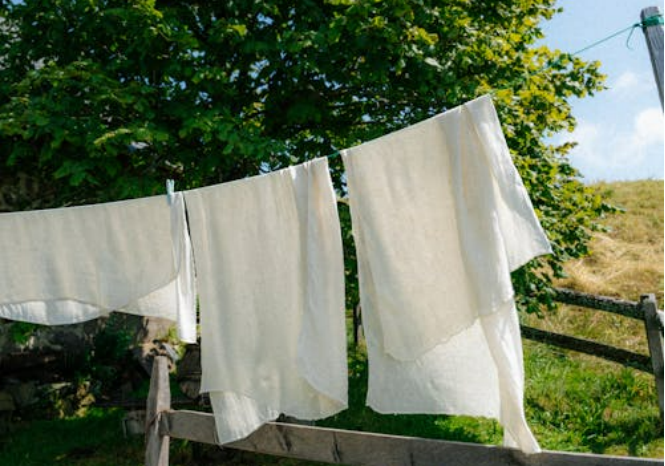
The biggest advantage of this system is that it dries naturally at room temperature, contains no solvents, and has no odor. It can directly replace solvent-based systems and is currently a highly sought-after environmentally friendly solution by brands.
For example, finishing garments, cut pieces, and shoe materials, as well as waterproofing treatments for household cleaning products.
The process is simplified and easier for operators to learn.
| Product | Handle | Water Repellency / Wash Durability | Stain / Oil Resistance | Application |
|---|---|---|---|---|
| FU5234 | Firmer | Good | Strongest (incl. vegetable oils) | Pad / Spray / Wash |
| FU5234S | Softer | Better water repellency & wash durability | Slightly weaker than 5234 | Pad / Spray / Wash |
Room temperature fluorine-free waterproofing agents are available in FU5234 and FU5234S for various applications.
In short:
If your priority is a soft hand feel with strong water repellency and wash durability, choose FU5234S.
If you need better stain and oil resistance with a firmer surface, go with FU5234.

Low-temperature drying or air-drying
FU5234S shows significantly better water repellency on fabrics such as polyester pongee and Taslan when compared with typical fluorine-free products—especially under room-temperature air-drying conditions.
Water/IPA (Volume Ratio) | Surface Tension | Grade |
98:2 | 59 | 1 |
95:5 | 50 | 2 |
90:10 | 42 | 3 |
80:20 | 33 | 4 |
70:30 | 27.5 | 5 |
60:40 | 25.4 | 6 |
50:50 | 24.5 | 7 |
40:60 | 24 | 8 |
Polyester Water Repellent Finishing | Dosage (g/L) | Rating |
FU5234 | 80 | 5 |
FU5234S | 80 | 4 |
Application Method:
Spray Finishing Process: After finishing, the fabric is naturally air-dried at room temperature, followed by water repellency testing.
(Room-Temperature Air-Dried Water Repellency Test)
Washing Method:
Washing test follows AATCC 135, washing at 40°C, drying method: air drying.
The test is performed after 5 washing and air-drying cycles.
Water Repellency Test Method:
Water repellency is evaluated according to AATCC 22.
| Product | Dosage (g/L) | Polyester Pongee L0 | Polyester Pongee L5 | White Cotton Woven L0 | White Cotton Woven L5 | White Taslon L0 | White Taslon L5 |
|---|---|---|---|---|---|---|---|
| FU5234 | 200 | 90 | 0–50 | 80– | 0 | 75 | 50 |
| FU5234S | 200 | 100 | 100 | 95 | 0–50 | 100 | 90– |
| Conventional Fluorine-Free WR | 200 | 0–50 | 0 | 0–50 | 0 | 0 | 0 |
This room-temperature film-forming system isn’t just about lowering the drying temperature. It addresses several long-standing issues in the industry:
No need for high heat to form a hydrophobic film
Zero solvent, zero odor
Broader fabric compatibility
Lower energy use and reduced carbon footprint
A practical replacement for solvent-based waterproofing in many end uses
More flexible and forgiving processing conditions in mills
For dyeing factories, the lower temperature requirement means more stable processing and less risk.
For brands, it aligns with sustainability goals.
For end-use products, it brings better balance between hand feel, durability, and environmental safety.
Contact us to know more details about room Temperature Fluorine-free Waterproofing Agents ,email: info@sylicglobal.com.


